Mia Long · 12 October 2026
Rural Tech Grants Ignite Innovation in Poland's Underserved Classrooms
Poland's rural schools have started receiving targeted technology grants that bring digital tools into areas long cut off from modern resources, and these funds are reshaping how teachers deliver lessons while giving students access to coding platforms, virtual labs, and collaborative software. Observers note that the initiative began gaining momentum in 2024, yet key expansions are slated for October 2026 when additional rounds of funding will target schools with limited broadband and outdated hardware.
Background on Rural Education Challenges
Many villages across eastern and southern Poland operate schools that serve fewer than 200 students each, and these institutions often lack the budgets for interactive displays or reliable internet connections, whereas urban centers receive steady upgrades through municipal programs. Data from national education statistics shows that rural students trail their city counterparts by measurable margins in digital literacy assessments, so the grant program addresses this gap by supplying hardware bundles, teacher training modules, and ongoing technical support. Researchers at Polish universities have tracked participation rates, and figures reveal that over 1,200 rural facilities applied during the first application cycle.
Grant Structure and Distribution
The program allocates resources through a competitive process managed by regional education offices, and successful applicants receive packages that include laptops, robotics kits, and cloud-based learning accounts. Funds also cover professional development sessions where instructors learn to integrate these tools into existing curricula without disrupting core subjects like mathematics or history. According to reports from the European digital education initiatives, similar approaches in other EU member states have produced measurable gains in student engagement when training accompanies equipment delivery.
Allocations prioritize schools in counties with the lowest average household income and weakest connectivity scores, while a separate track supports secondary institutions that want to launch after-school coding clubs. One village school in the Podkarpackie region used its award to equip a shared computer lab that now serves both daytime classes and evening adult literacy sessions, and administrators report higher attendance since the upgrades arrived.
Classroom Innovations Taking Hold
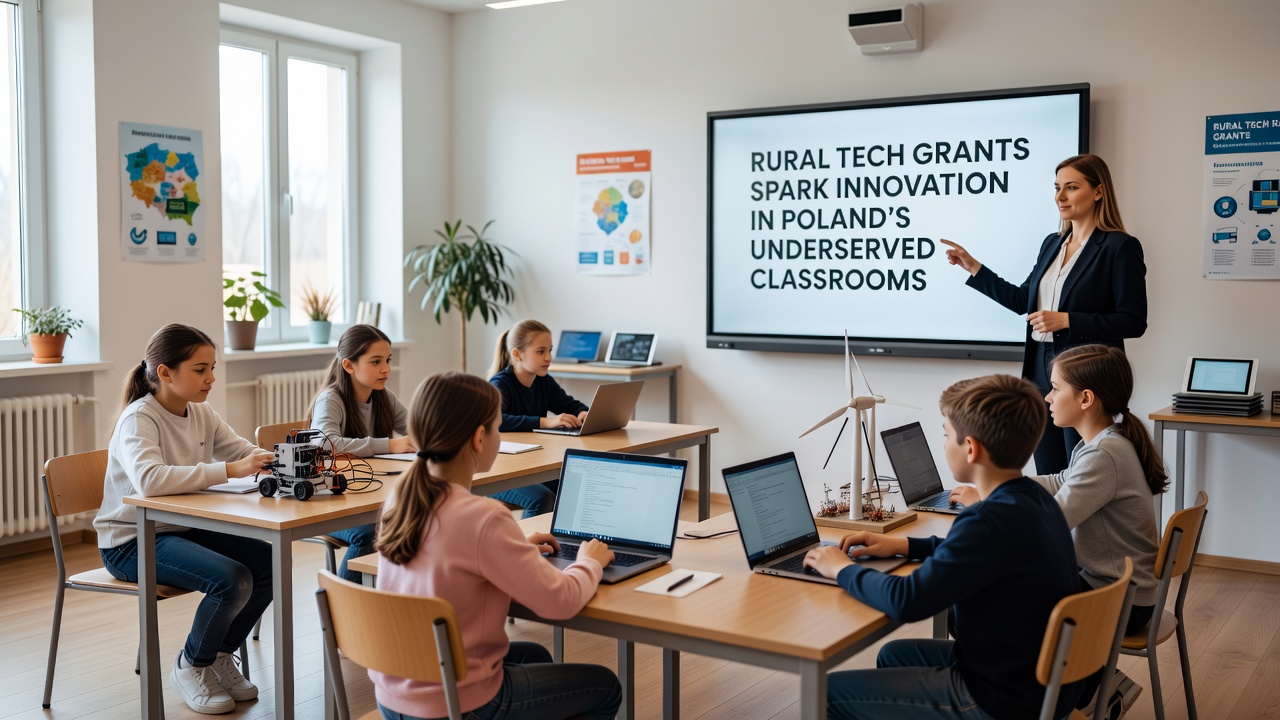
Teachers describe shifting from lecture-heavy formats to project-based activities once tablets and projectors reached their rooms, and students now build simple apps or simulate science experiments that previously existed only in textbooks. Data collected by regional coordinators indicates that 68 percent of participating classrooms introduced at least one new digital project within the first semester of funding. What's interesting is how these changes affect mixed-age groups, since many rural schools combine grades in single rooms, and the grant-supplied devices allow individualized pacing through adaptive software.

Take one educator in a small community near the Ukrainian border who incorporated drone-mapping exercises into geography lessons after receiving grant hardware, and local students mapped nearby farmland changes that aligned with agricultural science topics. Such examples multiply as more schools complete their training cycles, and ministry tracking shows sustained use of the tools rather than storage in closets. OECD education reports highlight comparable outcomes in remote regions of member countries when funding includes both devices and sustained coaching.
Broader Impacts and October 2026 Outlook
Communities surrounding funded schools report secondary benefits, including parents who attend evening workshops on basic digital skills and small businesses that gain indirect access to the new equipment for community events. Enrollment numbers in some villages have stabilized rather than declined, and local leaders attribute part of this trend to visible modernization. The next major disbursement window opens in October 2026, when officials plan to expand eligibility to additional primary schools and introduce specialized grants for artificial intelligence introductory modules.
Evaluators continue to monitor long-term effects through standardized testing and teacher surveys, and preliminary results suggest improvements in problem-solving scores among students who use the tools regularly. Partnerships with private technology firms supply maintenance contracts that keep equipment functional beyond initial delivery dates, and these collaborations reduce the burden on already stretched school budgets.
Conclusion
Rural tech grants continue to narrow resource gaps between Poland's countryside classrooms and their urban counterparts through structured funding, training, and equipment distribution. October 2026 will mark another expansion phase that brings further tools and opportunities to underserved areas, and ongoing data collection will document how these investments translate into lasting educational gains.