Amir Wolf · 9 November 2026
Refugee Enrollment Trends Prompt Shifts in STEM Resource Allocation at Universities Throughout Poland
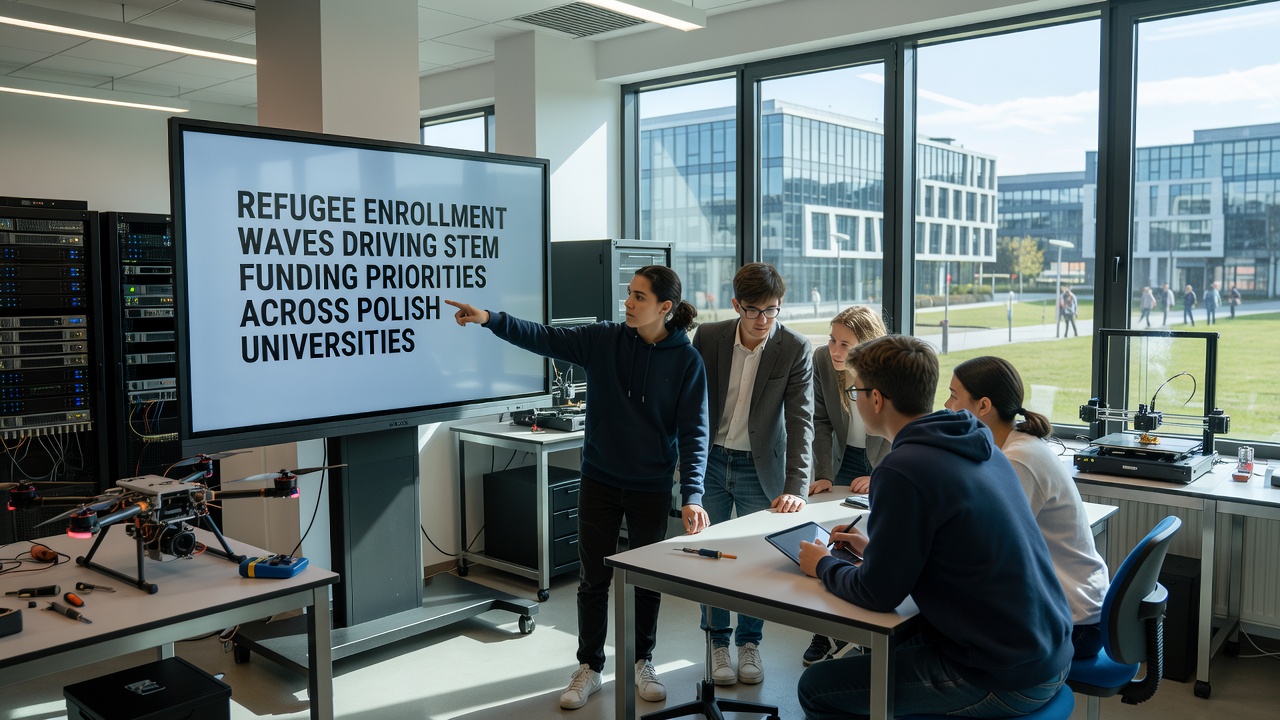
Enrollment patterns among refugee populations have altered funding distributions for science, technology, engineering and mathematics programs at Polish universities since 2022, and observers note that these changes continue to evolve through late 2026. Data from the Polish Ministry of Education and Science shows that universities in Warsaw, Krakow and Wroclaw reported a 47 percent rise in refugee student registrations in STEM fields between 2023 and 2025, with Ukrainian nationals forming the largest cohort followed by smaller groups from Belarus and Syria. This surge has coincided with targeted allocations from national and European Union budgets that prioritize laboratory upgrades, scholarship expansions and faculty recruitment in engineering and computer science departments.
Enrollment Data and Institutional Responses
Figures released in October 2025 by the National Agency for Academic Exchange indicate that over 18,000 refugee students enrolled in Polish higher education institutions during the previous academic year, and roughly 62 percent of those registrations occurred in STEM disciplines. Universities responded by adjusting internal resource models, which means reallocating portions of their operational budgets toward expanded course sections in data analytics and robotics while also applying for supplemental grants. One study from the University of Warsaw documented how departments secured an average increase of 1.2 million euros per institution in dedicated STEM support during the 2024-2025 cycle, with funds directed at language support modules integrated into technical curricula.
Researchers at the Jagiellonian University tracked similar patterns and found that enrollment waves prompted partnerships with industry groups such as the Polish Chamber of Commerce for Technology, resulting in internship pipelines that connect refugee graduates directly to local tech firms. These collaborations emerged because institutions needed to demonstrate measurable integration outcomes to qualify for continued external financing.
Funding Mechanisms and Policy Adjustments
European Union structural funds have played a central role in these developments, and records from the European Commission confirm that Poland received 340 million euros under the 2021-2027 cohesion policy framework earmarked for migrant-inclusive education initiatives. A portion of those resources flows through the Ministry of Education and Science to universities that submit proposals demonstrating refugee enrollment growth in high-demand technical fields. Observers note that November 2026 marks the midpoint review period for several multi-year grants, at which point institutions must present updated enrollment statistics and completion rates to retain remaining disbursements.
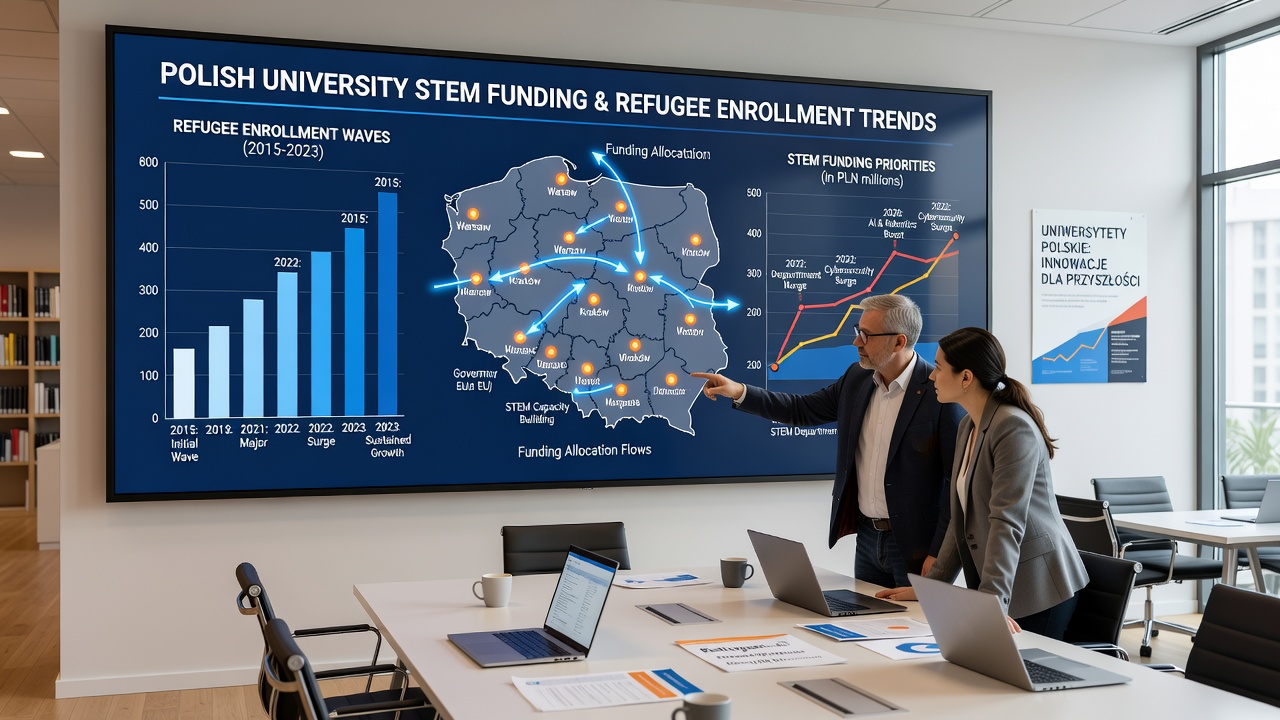
Policy adjustments at the national level include revised criteria for the Excellence Initiative program, which now weights proposals higher when they include dedicated STEM pathways for displaced learners. This shift reflects data compiled by the OECD that links increased technical education access for refugees with faster labor market entry and reduced long-term fiscal burdens on host countries. Universities in regional cities such as Lublin and Gdansk have leveraged these changes to launch new master's programs in renewable energy systems and cybersecurity, each designed with modular entry points that accommodate varying levels of prior academic preparation.
Regional Variations Across Institutions
Funding priorities differ by region, and institutions in eastern Poland report heavier emphasis on infrastructure expansion because they absorbed larger initial refugee cohorts. In contrast, universities in the west have focused resources on research collaborations and international accreditation efforts that attract additional non-EU students. A report issued by the Conference of Rectors of Academic Schools in Poland outlines how these divergent strategies still converge around core STEM competencies, with shared digital platforms for remote laboratory access emerging as one common solution.
Those who have examined grant applications note that successful proposals often cite specific enrollment metrics, such as the 31 percent year-over-year increase in refugee women entering computer science programs documented at the Gdansk University of Technology. Such statistics help justify expenditures on gender-balanced mentorship programs and childcare support services that enable continued participation.
Looking Ahead to 2026 and Beyond
Projections prepared by the Polish National Agency for Academic Exchange suggest that refugee enrollment in STEM will stabilize rather than decline through 2027, provided current funding streams remain intact. This outlook informs strategic planning at multiple universities, where administrators are aligning faculty hiring timelines with anticipated demand in artificial intelligence and biotechnology subfields. External evaluations scheduled for early 2026 will assess whether these investments produce sustained improvements in graduation rates and employment outcomes among the target student populations.
Conclusion
Refugee enrollment waves have therefore become a measurable driver of STEM funding decisions across Polish universities, and the mechanisms established to channel resources continue to adapt in response to updated enrollment figures and policy reviews. Institutions that align their proposals with documented demographic shifts and integration benchmarks position themselves to maintain access to both national and European support structures through the remainder of the decade.