Sam Günther · 7 October 2026
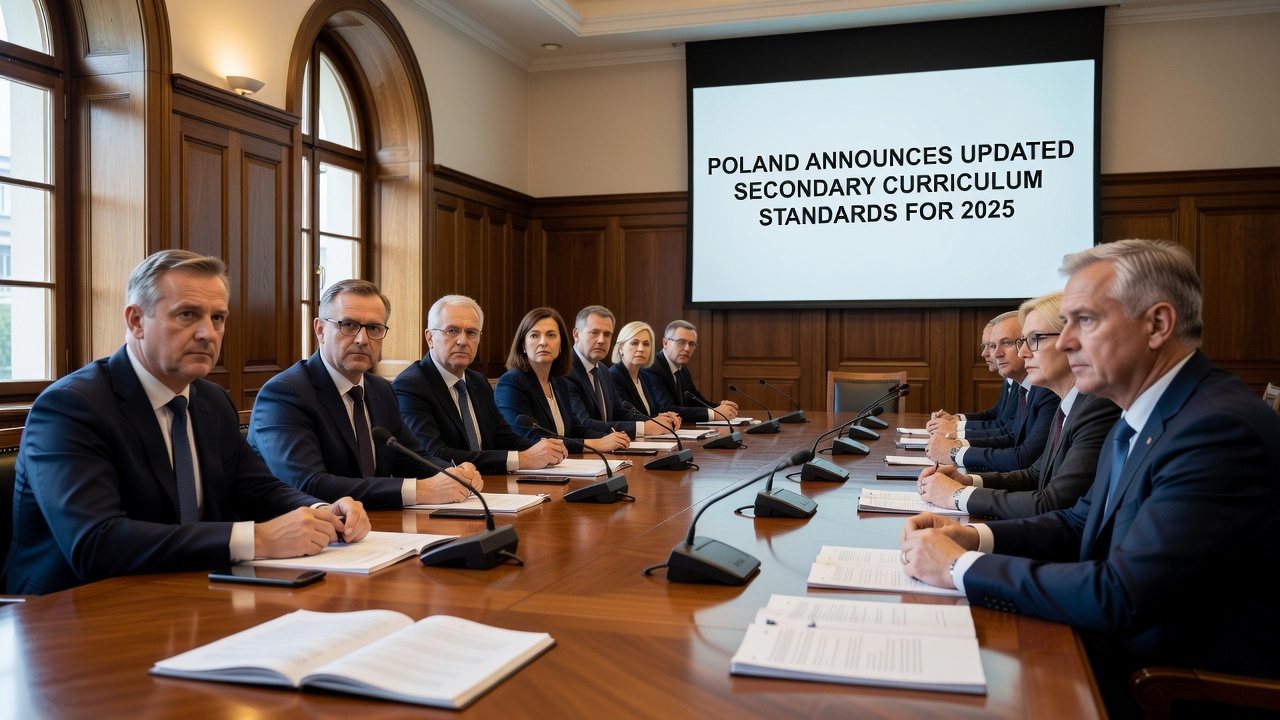
The Polish Ministry of National Education has finalized revisions to secondary school curriculum standards scheduled for implementation in the 2025 academic year. These updates seek to strengthen foundational skills while introducing greater flexibility in subject pathways to better prepare students for higher education and vocational training.
Key Revisions Across Core Disciplines
Mathematics requirements now emphasize applied problem-solving and data analysis, replacing some abstract theoretical modules with real-world modeling exercises. Science curricula incorporate expanded modules on environmental sustainability and digital technologies, aligning Polish standards with EU benchmarks. History and social studies content has been adjusted to include more contemporary European and global perspectives, with increased focus on civic education and critical thinking. Language instruction maintains mandatory Polish and English while adding optional modules in German or French to support regional mobility.
Vocational tracks receive enhanced integration with academic subjects, allowing students to combine technical training with core academic credits. Assessment methods shift toward continuous evaluation alongside final examinations, aiming to reduce exam pressure and promote consistent learning outcomes. These modifications address feedback from educators and employers regarding gaps in practical competencies among recent graduates.
Rollout Timeline and Educator Support
Schools will begin phased adoption in September 2025, starting with first-year secondary cohorts. The ministry plans nationwide teacher training programs covering new content delivery and digital tools, with supplementary online resources available from early 2025. Pilot programs in select regions have reported positive initial feedback on student engagement, though full evaluation awaits the first cohort completion in 2028. Funding allocations include grants for updated textbooks and classroom technology to facilitate smooth transition across public and private institutions.
Stakeholders note that the revisions prioritize clearer educational routes from secondary level into university or apprenticeship programs. Ongoing consultations with universities and industry representatives will continue to refine standards based on emerging labor market data. The ministry emphasizes that these changes maintain core national values while adapting to international educational trends.